La Côte d'Opale - Le Site des Caps
 The French Opal Coast covers the seaside holiday area of the Pas de
Calais, from Calais in the north to
Berck in the south, but also extends to Le Crotoy. It is known for its
beautiful cliffs such as Cape Blanc
Nez and Cape Gris Nez and for its wide area of dunes. The cliffs of chalk are very similar to
the white cliffs of Dover at the other side
of the Channel in England. Cap Blanc Nez does not protrude
into the sea like a typical cape, but is a high point where a chalk ridge has been truncated by the sea, forming a cliff that is topped by an obelisk
commemorating the Dover
Patrol which kept the Channel free from U-boats during World War I. The headland's name is actually a
French deformation of an original English name, Black Nen, deriving from
the time when Calais was under English rule, and therefore its original meaning
is Cape Black Nose.
The French Opal Coast covers the seaside holiday area of the Pas de
Calais, from Calais in the north to
Berck in the south, but also extends to Le Crotoy. It is known for its
beautiful cliffs such as Cape Blanc
Nez and Cape Gris Nez and for its wide area of dunes. The cliffs of chalk are very similar to
the white cliffs of Dover at the other side
of the Channel in England. Cap Blanc Nez does not protrude
into the sea like a typical cape, but is a high point where a chalk ridge has been truncated by the sea, forming a cliff that is topped by an obelisk
commemorating the Dover
Patrol which kept the Channel free from U-boats during World War I. The headland's name is actually a
French deformation of an original English name, Black Nen, deriving from
the time when Calais was under English rule, and therefore its original meaning
is Cape Black Nose.

The cliffs of the Cap Gris Nez are the closest point of France to England - 34 km (21 mi) from their English counterparts
at Dover. Smothered in sea pinks and thrift, the cliffs are a perfect vantage point
to see hundreds of ships from oil tankers to little fishing trawlers plying the
waters below. On a clear day, the emblematic white cliffs of
Dover on the English shore can be seen. The cliffs of Cap Gris Nez are made of sandstone, clay
and chalk. They are mainly grey which
gives the cape its name.
A nice stamp.
Received from: sunsky
 La Dune du Pyla
The Great Dune of Pyla (or Pilat) is the tallest sand dune in Europe. It is located in La Teste-de-Buch in
the Arcachon Bay area, France, 60 km from Bordeaux.Pilat is sometimes spelled Pyla, hence
the alternative name "dune of Pyla". More accurately, Pyla is the name of the
closest town, Pyla-sur-Mer, which is part of La Teste-de-Buch municipality in
the Gironde department. The dune has a volume of about 60,000,000 m³, measuring around 500 m wide
from east to west and 2.7 km in length from north to south. Its height is
108 metres above sea level. The dune is a famous tourist destination with more
than one million visitors per year. The dune is considered a foredune, meaning a dune that runs parallel to a
shoreline, behind the high tide line of a beach. The dune has been observed to
move landward, slowly pushing the forest back to cover houses, roads and even
portions of the Atlantic
Wall.

A beautiful EUROPA stamp.
Received from: sunsky
 Haute Chaine du Jura
With a surface area of 11,000 hectares (including nearly 8,000 ha of forest land), la the Haute Chaine du Jura Nature Reserve is among the most important in France. There are seven large areas: the cliffs, the screes, the mountain forests, the wetlands, the high grasslands, the dry grasslands and the pine forests wrapping around the Crêt de la Neige. Eighteen communes share a part of their territory with the Haute Chaine du Jura Nature Reserve: Bellegarde, Léaz, Lancrans, Collonges, Confort, Chézery-Forens, Farges, Péron, Saint-Jean-de-Gonville, Thoiry, Lélex, Sergy, Crozet, Echenevex, Mijoux, Gex, Vesancy, Divonne-les- Bains.


Beautiful stamps.
Received from: Elise-57
 Europian bison
The European bison, also known as
wisent or the European
wood bison, is a Eurasian species of bison. It is the heaviest surviving wild land animal in Europe. European bison were hunted to extinction in the wild, with the last wild animals
being shot in the Białowieża Forest in Eastern Poland in 1919 and in the Western Caucasus
in 1927, but have since been reintroduced from captivity into several countries
in Europe, all descendants of the
Białowieża or lowland European bison. They are now forest-dwelling.

Nice stamps.
Received from: obernikhin
 Deer
Deer
Deer are widely
distributed, with indigenous representatives in all continents except Antarctica
and Australia, though Africa has only one native species, the Red Deer, confined
to the Atlas
Mountains in the northwest of the continent. However, Fallow Deer have been
introduced to South
Africa. Deer live in a variety
of biomes ranging from tundra to the tropical rainforest. While often associated
with forests, many deer are ecotone species that live in transitional areas between forests and thickets (for cover)
and prairie and savanna (open space). The majority of large deer species inhabit
temperate mixed deciduous forest, mountain mixed coniferous forest, tropical
seasonal/dry forest, and savanna habitats around the world.

A beautiful stamp.
Received from: shica

Nice stamps.
 Received from: Kaate
 Alpine Ibex
The Alpine ibex
(Capra ibex) is a species of wild goat that lives in the mountains of the European Alps. In
its habitat region, the species is known as bouquetin (French),
Steinbock (German), stambecco (Italian), and kozorog
(Slovenian). Being an excellent climber, its habitat is the rocky region along the snowline
above alpine forests, where it occupies steep, rough terrain at elevations of
1,800 to 3,300 metres (5,900 to 10,800 ft). Alpine ibexes are strictly herbivorous, with over half of their diet
consisting of grasses, and the remainder being a mixture of moss, flowers,
leaves, and twigs.

 The need to drink every few days in the summer causes the animals to seek
permanent residence close to a dependable water source during this season.
Alpine ibexes will hide in the rocks of the steep cliffs when pursued by
predators. The climbing ability of the Alpine ibex is such
that it has been observed standing on the sheer face of a dam, where it licks
the stonework to obtain mineral salts.
The need to drink every few days in the summer causes the animals to seek
permanent residence close to a dependable water source during this season.
Alpine ibexes will hide in the rocks of the steep cliffs when pursued by
predators. The climbing ability of the Alpine ibex is such
that it has been observed standing on the sheer face of a dam, where it licks
the stonework to obtain mineral salts.
A beautiful stamp.
Received from: Lionheart2010
Another postcards with beautiful stamps.
Received from: tinkara
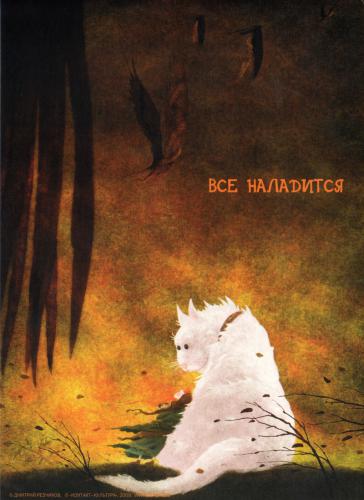
 A beautiful card from Russia but I don't know anything about the painting.
Received from: veronica18

Nice stamps.
 Alexey Arzomasov - Mirages

Nice stamps.
Received from: Frau_Madam
 Till Eulenspiegel
Till Eulenspiegel
was an impudent trickster figure
originating in Middle Low German folklore. His tales were disseminated in
popular printed editions narrating a string of lightly connected episodes that
outlined his picaresque career. In the stories, he is presented as a trickster or fool who played practical
jokes on his contemporaries, exposing vices at every turn, greed and folly,
hypocrisy and foolishness. The book has been translated, often in mutilated versions, into many languages.

Beautiful stamps.
Received from: farabella
Vedomosti Newspaper
A newspaper published in Moscow from Sept. 3(15), 1863, through Mar. 14 (27),
1918; it was published three times a week from 1863 to 1867 and daily from 1868.
 A nice stamp.
Received from: Evhimovich
 Ivan Aivazovsky - Venice (1843)
Ivan Aivazovsky (July 29, 1817 – May 5, 1900) was a
Russian world-renowned painter of Armenian descent living and working in Crimea, most famous for his seascapes, which constitute more than
half of his paintings. Aivazovsky is widely considered as one of the greatest
seascape painters of all times.

Beautiful stamps.
Received from: dusi
Gzhel
 Gzhel is a style
of ceramics which takes its name from the village of Gzhel and surrounding area,
where it has been produced since 1802. Gzhel pottery was originally created by potters in their homes, however fairly
early on these potters started to organize into workshops to increase
production. The workshops eventually became a factory with pieces being formed
in moulds and potters
being responsible for separate pieces, a specific style, or decoration. The
earliest pieces were created of earthenware. The pottery was painted solid white
with distinctive blue designs.
Gzhel is a style
of ceramics which takes its name from the village of Gzhel and surrounding area,
where it has been produced since 1802. Gzhel pottery was originally created by potters in their homes, however fairly
early on these potters started to organize into workshops to increase
production. The workshops eventually became a factory with pieces being formed
in moulds and potters
being responsible for separate pieces, a specific style, or decoration. The
earliest pieces were created of earthenware. The pottery was painted solid white
with distinctive blue designs.
The same stamps as above.
Received from: Musa33
 Tung Ping Chau
Tung Ping Chau is an offshore island located in the northeast corner of Hong Kong in
Mirs Bay and is close to the
border with Guangdong Province in
mainland China. The
island has an area of 1.16 km² and consists of shale rock. A large part of the island is country parkland, with footpaths overgrown with
orchids, wild mint, and morning glories. At the island's southeastern end
are two huge rocks known as the Drum Rocks, or Watchman's Tower Rocks. At the north end is a chunk of land that has broken away from the
island; the Chinese say it represents the head of a dragon.
 Beautiful stamps.
Received from: Yuen
 Grand Canyon
The Grand Canyon of the Yellowstone River, formed by water and scoured by glaciers, is 20 miles (32 km) long, up to 1,200 feet (360 m) deep and 1,500-4,000 feet (450-1,200 m) wide. But it's not the canyon's statistics that impress, it's the sight of it. Two waterfalls, one above the other, cascade into the golden-walled Grand Canyon of the Yellowstone, their clear water forming an aquamarine ribbon winding far below.
Beautiful stamps.
Received from: emotis
 Dolphins
These offshore dolphins are found in pods ranging from a few animals to several hundreds. They are small, fast, and agile and the calves can keep up with their mothers from an early age. Common dolphin often breach and bow ride with boats, displaying the very distinctive figure of eight pattern on their sides. Frenzied activity may be seen when a group of dolphins work together to drive shoaling fish to the surface, often attracting seabirds such as gannets.
Nice stamps.
 Received from: Ichabodhides
A nice stamp.
Received from: saartwinkel
 Seals
Seals
Seals can be found in all waters of the world, from the Arctic and
Antarctic to tropical waters. They belong to the order Pinnipedia, which means
"fin-footed". Pinnipeds have four flippers - one pair in front, and one pair in
back. Pinnipeds are mammals. They're warm-blooded, give live birth,
nurse their young, breathe air, and have hair. Eared seals (sea lions and fur seals) have external ear flaps and
are able to use their flippers for walking on land by rotating their hind
flippers forward. While swimming, they use their front flippers for
power. All seals are carnivores. Their diet consists mostly of fish,
crustaceans and shellfish.
Beautiful stamps.
Received from: Nordfriesland
 Saimaan norppa
The Saimaa ringed seal is a subspecies of ringed seal. They are among the most endangered seals in the world, having a total population of only about 310 individuals. The only existing population of these seals is found in Lake Saimaa, Finland (hence the name). The population is descended from ringed seals that were separated from the rest when the land rose after the last ice age. This seal, along with the Ladoga Seal and the Baikal Seal, is one of the few living freshwater seals. They are coloured dark gray, with a gray-black dorsal with circular white rings. The Saimaa ringed seal has been protected since 1955. In order to protect the Saimaa ringed seal, there are voluntary fisheries restrictions in a part of their living areas.
Finnish EUROPA stamp.
Received from: Saint
 Budapest
 Beautiful stamps.